
Filmmakers · Writer-director and cinema obsessive
Quentin Tarantino Turned Movie Obsession Into a Directing Education
The video store mattered, but so did acting classes, failed production, relentless writing, and collaborators who could get a screenplay into the right hands.
How did Quentin Tarantino succeed?
Quentin Tarantino succeeded by converting intensive movie watching into distinctive screenwriting, then using those scripts to attract collaborators and financing. He skipped film school but studied acting, worked at Video Archives, and learned from an unfinished first feature before Reservoir Dogs established him as a writer-director in 1992.
The story
Quentin Tarantino's education was organized around movies rather than a filmmaking degree. Born in Knoxville in 1963 and raised largely in Southern California, he left high school and took acting classes. That training is important to a career often reduced to a video-store anecdote. His screenplays would become famous for people talking at length, performing identities, testing one another, and concealing threats inside apparently casual exchanges. Acting gave him another way to think about scenes: not simply as camera setups, but as situations in which a person wants something from someone else and chooses a tactic to get it.
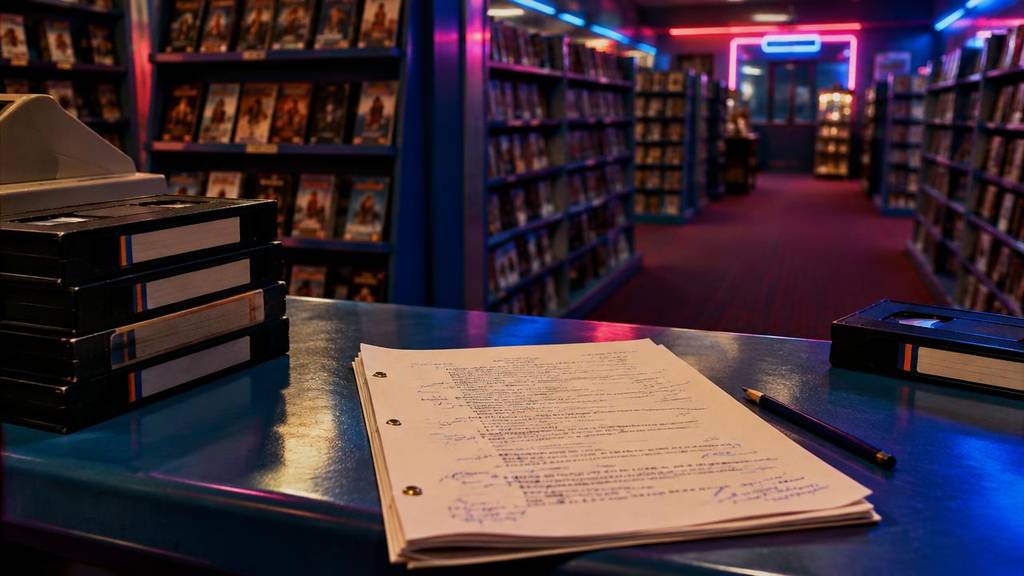
During the 1980s, Tarantino worked at Video Archives in Manhattan Beach, California. The shop supplied access to films and a community willing to argue about them. He watched across genres and national cinemas, developing an appetite for exploitation pictures, crime films, westerns, and less fashionable corners of movie history. The productive part was not merely accumulating titles. He noticed how particular scenes created pleasure: an entrance, a withheld fact, an unexpected music cue, a sudden change in power. That attention supplied a vocabulary he could later recombine. Enthusiasm became useful when it turned into decisions on the page.
His early attempt at a feature, My Best Friend's Birthday, was shot over several years in the 1980s and remained unfinished. It was not a secret masterpiece waiting to guarantee his future. It was an expensive form of practice in coordinating performances, equipment, time, and continuity. An aspiring director can imagine a scene effortlessly; making that scene with other people introduces resistance. Tarantino also continued writing. The scripts that became True Romance and Natural Born Killers helped establish that his voice could interest professionals even before he had a successful feature directing credit. Writing was the portable evidence of his ability.
Reservoir Dogs transformed that evidence into an opportunity. Producer Lawrence Bender helped move the screenplay toward production, and Harvey Keitel's involvement gave the project credibility and momentum. The film premiered at Sundance in 1992. Its design was strikingly practical: a robbery movie that largely withheld the robbery, concentrating instead on wounded criminals, conflicting accounts, and suspicion inside a warehouse. That did not make production easy, but it aligned limited means with a strong dramatic engine. The audience did not need a spectacular heist sequence to understand that something had gone catastrophically wrong. Performance, structure, and withheld information carried the pressure.
Pulp Fiction, released in 1994, expanded the method. Its intersecting crime stories rearranged chronology while allowing scenes to linger over food, manners, loyalty, and professional codes. Tarantino and Roger Avary won the Academy Award for original screenplay, and the film won the Palme d'Or at Cannes. Those achievements came through an intensely collaborative medium, not solitary viewing alone. Actors, producers, editors, cinematographers, and other department heads helped realize the work. Editor Sally Menke became a particularly important collaborator across his subsequent films. A self-directed education gave Tarantino a voice; skilled collaborators helped turn that voice into finished cinema.
The career that followed, from Jackie Brown in 1997 to later historical fantasies and Hollywood stories, shows why his route cannot be reduced to borrowing from favorite films. References are raw material, not a substitute for judgment. Tarantino's recognizable strengths include sustained scenes, forceful character entrances, tonal shifts, and a willingness to organize a feature around conversation. His lack of film-school credentials is factual, but it is not the mechanism of his success. The mechanism was a long apprenticeship in attention, writing, failed attempts, and relationships. He turned knowledge of cinema into work other people could read, finance, perform, and finally watch.
The Cheat Code: shortcuts that worked
1. Cheat Code: Study the Scene, Not Just the Movie
Break down a favorite sequence by entrances, withheld information, power changes, and its final turn. Convert admiration into a usable structural observation.
2. Cheat Code: Put the Expensive Event Offscreen
Reservoir Dogs builds drama from a robbery's aftermath. Design consequences and conflicting testimony instead of assuming you must stage the largest event.
3. Cheat Code: Give Conversation a Hidden Contest
Write dialogue in which each speaker is pursuing status, reassurance, information, or control, even when the surface topic seems ordinary.
4. Cheat Code: Let the Script Travel First
A screenplay can demonstrate your voice before you can finance a feature. Finish a draft that potential collaborators can evaluate without an elaborate pitch.
Your plan to do the same
- Watch three crime scenes from different decades and map how each distributes information.
- Write a ten-page aftermath scene with three characters who disagree about what happened.
- Assign each character a private objective before revising the dialogue.
- Read the scene aloud with actors and remove exchanges that do not alter tension.
- Shoot a contained version that depends on performance rather than spectacle.
- Use the completed scene and a polished feature script to approach suitable producing collaborators.
Frequently asked questions
Did Quentin Tarantino attend film school?
No. Tarantino did not attend film school. His development included extensive film viewing, acting classes, screenwriting, work at Video Archives, and an unfinished early feature. Calling him self-taught is reasonable, provided it does not erase the collaborators and practical experiences that helped shape his directing.
Did working in a video store launch Tarantino's career?
Video Archives helped Tarantino deepen his film knowledge and develop relationships, but the job alone did not launch his directing career. His screenplays, producer Lawrence Bender's efforts, Harvey Keitel's involvement, and the reception of Reservoir Dogs were more direct steps toward becoming an established feature filmmaker.
Was Reservoir Dogs Quentin Tarantino's first movie?
Reservoir Dogs was Tarantino's first completed feature as a director, premiering in 1992. He had previously worked on My Best Friend's Birthday, an unfinished feature project made during the 1980s. That earlier effort provided practical experience but did not become his commercial feature debut.