
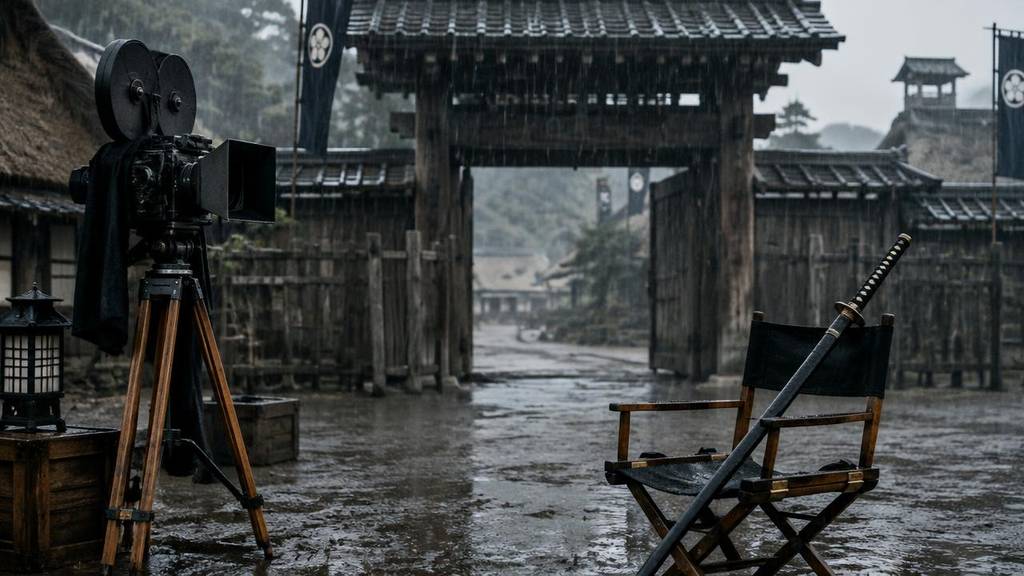
Filmmakers · Director, screenwriter, and former assistant director
Akira Kurosawa Learned Cinema Through Painting and Apprenticeship
He did not emerge from nowhere. A painter's eye, a demanding studio apprenticeship, and years of writing supplied an alternative to a film-school degree.
How did Akira Kurosawa succeed?
Akira Kurosawa succeeded by combining artistic self-development with a rigorous studio apprenticeship. He entered Japanese filmmaking as an assistant director, learned under Kajiro Yamamoto, and strengthened his screenwriting through practice. His command of movement, weather, performance, and moral conflict later gave his films extraordinary visual and emotional force.
The story
Akira Kurosawa was born in Tokyo in 1910 and initially pursued painting rather than a film-school qualification. Drawing and composition gave him a way of thinking through images before a camera became his primary tool. His older brother Heigo, who worked as a benshi narrating silent films, also helped expose him to cinema. These influences did not amount to a private, complete filmmaking education. They supplied interests and habits that could be developed later. The distinction matters: Kurosawa's route was outside formal film school, but it led into one of the most structured practical learning environments available, the Japanese studio system.
In 1936, Kurosawa joined Photo Chemical Laboratories, a company that became part of Toho, after applying for an assistant-director position. He was 26. The work placed him inside productions where scenes had to be prepared, coordinated, and completed on schedule. Under director Kajiro Yamamoto, he encountered far more than camera placement. Assistant directors needed to understand actors, locations, props, continuity, and the many decisions connecting a screenplay to a day on set. Yamamoto became an important mentor. Calling Kurosawa self-taught without mentioning this apprenticeship would replace a rich learning process with a misleading story of solitary discovery.
Screenwriting became another central discipline. Kurosawa wrote while working as an assistant, learning to organize behavior and conflict before directing his own features. A screenplay is a useful test of visual thinking because it demands more than a striking picture: something must happen, and that event must alter what follows. His directing debut, Sanshiro Sugata, arrived in 1943. Set in the world of martial arts, it gave physical action a connection to personal development and restraint. The film also began a career shaped by wartime and postwar Japan, circumstances that affected production and cannot be separated neatly from the stories he could tell.
Drunken Angel in 1948 marked the beginning of Kurosawa's major collaboration with Toshiro Mifune, while Takashi Shimura remained another crucial performer in his work. Rashomon, released in 1950, won the Golden Lion at Venice in 1951 and helped bring Japanese cinema to wider international attention. Its contradictory accounts of a violent encounter made uncertainty the film's organizing principle. The forest, sunlight, faces, and movement do not simply illustrate testimony; they help make each version compelling and unstable. The accomplishment depended on writing, acting, cinematography, editing, and sound working together. Kurosawa's authority was exercised through collaboration rather than in the absence of it.
Ikiru in 1952 built drama around a bureaucrat confronting terminal illness, while Seven Samurai in 1954 expanded into a large ensemble and demanding action filmmaking. Rain, mud, geography, and groups moving through space made the battles physically legible and emotionally costly. Kurosawa's practical command helped organize complex material without reducing every character to a plot function. He could move from a crowd to a revealing gesture, from a strategic problem to a personal loss. Such effects are not explained by a painter's eye alone. They reflect accumulated experience with performance, coverage, cutting, and the management of an entire production.
Later films including Kagemusha in 1980 and Ran in 1985 returned his visual imagination to historical conflict on a grand scale. His painted storyboards make the relationship between his early artistic interests and mature cinema especially tangible. Yet the career also included financing difficulties and long gaps between projects, resisting any easy equation between mastery and uninterrupted opportunity. Kurosawa's example is strongest when understood as a layered education: independent artistic development, mentorship, paid apprenticeship, writing, and repeated directing. He did not need a film degree to become a major filmmaker. He did need years of learning from work, other people, and the consequences of his own choices.
The Cheat Code: shortcuts that worked
1. Cheat Code: Make Weather Change the Action
Use rain, heat, wind, or mud only when it changes movement, visibility, or choices, rather than treating atmosphere as decorative footage.
2. Cheat Code: Learn the Assistant's Whole Set
Observe how props, performers, schedules, and continuity connect. Kurosawa's apprenticeship developed production judgment beyond isolated camera technique.
3. Cheat Code: Draw the Conflict Before the Shot
Sketch where people stand, what separates them, and who can move. Use composition to clarify the scene's relationships.
4. Cheat Code: Rewrite the Same Event Through Another Witness
Following Rashomon's structural challenge, change what a witness wants to admit and observe how that changes the event's presentation.
Your plan to do the same
- Write a two-page scene about a disputed encounter with a clear moral consequence.
- Rewrite it from a second participant's self-protective perspective.
- Draw six frames for each version, changing distance and emphasis deliberately.
- Volunteer or work on a production where you can observe assistant-director responsibilities.
- Shoot the scene with blocking that remains understandable without dialogue.
- Edit both versions and ask viewers which visual choices changed their judgment.
Frequently asked questions
Did Akira Kurosawa attend film school?
Kurosawa did not follow a film-school route. He pursued painting before entering the film industry as an assistant director in 1936. His development depended heavily on studio work and mentorship under Kajiro Yamamoto, making apprenticeship a more accurate description than learning entirely alone.
Who taught Akira Kurosawa filmmaking?
Director Kajiro Yamamoto was Kurosawa's most important early filmmaking mentor. Working under him in the studio system, Kurosawa learned a broad range of production responsibilities and developed as a screenwriter. His earlier interests in painting and cinema complemented that apprenticeship rather than replacing professional instruction.
Which film brought Akira Kurosawa international recognition?
Rashomon was the decisive international breakthrough. Released in Japan in 1950, it won the Golden Lion at the Venice Film Festival in 1951. Its success introduced many overseas viewers to Kurosawa and helped expand international interest in Japanese cinema, although he had already directed several features.