
Entrepreneurship · Home-improvement television host and renovation educator
Bob Vila Made the Renovation Process Worth Watching
His great teaching tool was not pretending to know everything. It was asking the right specialist to show the work.
How did Bob Vila succeed?
Bob Vila succeeded by combining practical renovation experience with a host's ability to make specialist knowledge understandable. Rather than presenting home improvement as effortless, he guided viewers through real projects and conversations with tradespeople. This Old House and later programs turned that explanatory approach into a durable public identity.
The story
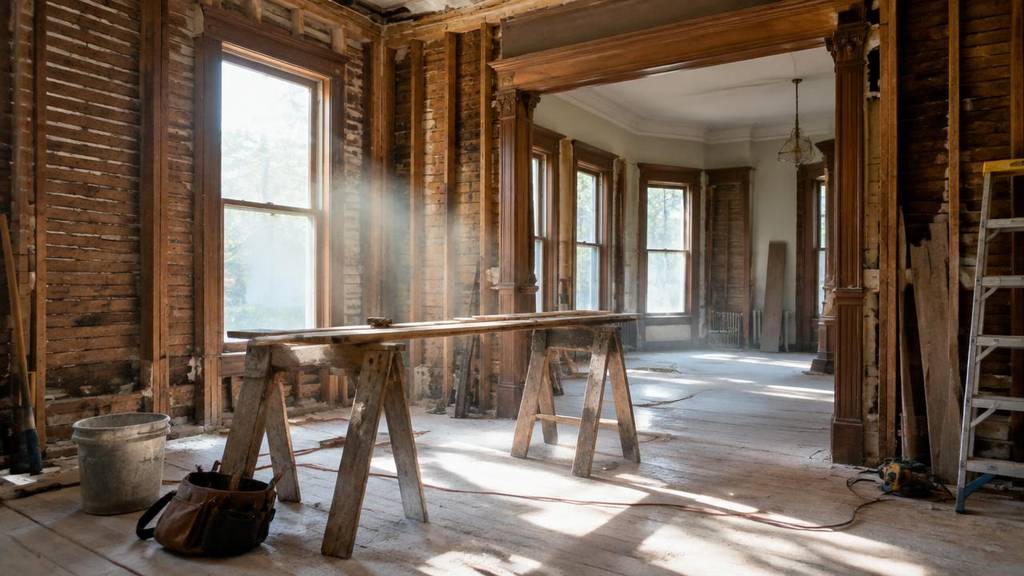
When This Old House premiered on Boston public television in 1979, renovation became something viewers could follow rather than merely admire after completion. Bob Vila served as the guide. The program's first project, a deteriorating house in Dorchester, Massachusetts, supplied the kind of complications that polished decorating photographs omit. Materials had histories, buildings concealed problems, and professional trades mattered. Vila's contribution was to keep the work intelligible. He could ask why a wall needed opening or how a repair should proceed, giving homeowners a way into decisions that otherwise seemed to belong exclusively to contractors.
Born in Miami on June 20, 1946, Vila encountered building through his father, who built the family home. He later earned a journalism degree at the University of Florida and served in the Peace Corps in Panama. Those facts complicate a simplistic self-taught label in a useful way. He was college educated, but not through a conventional architecture or construction degree. Communication and practical building experience arrived through different routes. His later television career joined them: the ability to understand a project was valuable, but so was knowing how to frame a question for someone seeing the process for the first time.
Before television, Vila operated a residential remodeling and design business. His restoration work attracted attention and led to his selection as host of This Old House. That background distinguished him from a presenter encountering tools only after a producer handed over a script. Yet the show did not require him to perform every trade himself. Carpenters, plumbers, electricians, and other specialists supplied their own expertise. The format made their reasoning visible. A homeowner could learn the vocabulary needed to discuss a job, recognize dependencies, and appreciate why an apparently simple change might trigger substantial work elsewhere.
Vila hosted This Old House from 1979 until 1989. The long project arc was a powerful instructional choice. Instead of compressing renovation into a magical reveal, episodes returned to the same building as work progressed. Viewers saw that demolition, structural repair, utilities, finishes, and budgeting belonged to a sequence. Television inevitably edited the labor, but the continuing project preserved a sense of cause and effect. A beautiful room was not presented as a shopping list alone. It was the consequence of decisions made earlier, some involving systems that would disappear behind finished surfaces.
In 1990, Vila began Bob Vila's Home Again, extending his place in home-improvement television. Books, additional programming, and online publishing expanded the audience for his explanations. The durable brand was built around a particular relationship with viewers: an informed homeowner's guide rather than an all-purpose substitute for licensed professionals. That distinction is crucial in a field where a misunderstood instruction can damage property or cause injury. Understanding an electrical panel is useful even when the correct next step is hiring an electrician. A teaching format can increase independence without implying that every job should become a do-it-yourself experiment.
Vila's career offers a strong model for learning complex practical subjects in public. Begin with real work, locate the people who know its difficult parts, and translate their explanations without erasing the difficulty. His journalism education was not an irrelevant detour; it helped turn renovation experience into accessible instruction. The resulting authority was collaborative. For today's learner, the objective is not to imitate a television host's confidence while skipping the experience underneath it. It is to develop better questions, understand the order of work, and recognize which decisions require a professional's tools, judgment, or legal authorization.
The Cheat Code: shortcuts that worked
1. Cheat Code: Ask What Is Behind the Finish
Before choosing visible materials, learn what structure, moisture control, wiring, or plumbing supports them. Hidden systems often determine whether a cosmetic upgrade lasts.
2. Cheat Code: Interview the Trade
Ask a qualified professional to explain one decision and its alternatives. Record the reasoning, not just the product name or final price.
3. Cheat Code: Follow One House Through Time
Study a complete renovation sequence instead of collecting disconnected makeover clips. Continuity reveals dependencies that a before-and-after image conceals.
4. Cheat Code: Learn the Stop Line
Identify permit, structural, electrical, and hazardous-material boundaries before starting. Competence includes knowing when observation should replace hands-on experimentation.
Your plan to do the same
- Choose one room and document its condition before selecting cosmetic changes.
- Identify the building systems connected to the proposed work.
- Consult local permit requirements and qualified professionals about risky or regulated tasks.
- Write the project's sequence from investigation through finishing.
- Complete only a clearly bounded task suited to your tools and competence.
- Photograph the result and record what a specialist should inspect or handle next.
Frequently asked questions
Did Bob Vila study architecture?
Vila earned a journalism degree from the University of Florida, not an architecture degree. He developed renovation experience through family exposure and his remodeling business. His television work combined that practical knowledge with interviewing and explanation, while relying on specialist tradespeople for their respective areas of professional expertise.
When did Bob Vila host This Old House?
Vila hosted This Old House from its 1979 debut through 1989. The original series followed real renovation projects over multiple episodes, including its first house in Dorchester, Massachusetts. He later fronted Bob Vila's Home Again, which began in 1990 and continued his association with practical home-improvement instruction.
Was Bob Vila the builder doing every job on television?
No. Vila's central role was host and guide, supported by his own renovation experience. Skilled tradespeople performed and explained specialized work. The educational value came partly from those exchanges: viewers could understand a process without assuming that one presenter personally supplied every professional skill a house required.