
Design · Harlem fashion designer and luxury streetwear pioneer
Dapper Dan Built the Luxury Wardrobe Harlem Wanted
Denied a conventional place inside luxury, Daniel Day built a neighborhood design language that luxury eventually had to acknowledge.
How did Dapper Dan succeed?
Dapper Dan succeeded by designing for Harlem customers overlooked by European luxury houses. He learned through observation, experimentation, and skilled collaborators, developing custom garments with prominent luxury-style branding. His boutique built credibility through musicians, athletes, and local clients; decades later, public recognition of his influence helped lead to an official Gucci partnership.
The story
Daniel Day was born in Harlem in 1944, into a large family with limited money and a neighborhood rich in codes of dress. Long before he became Dapper Dan the designer, he learned how clothing could announce confidence, success, and belonging. His early life included gambling and street hustling, but also serious reading and a growing interest in political and cultural identity. During the 1960s, travel in Africa expanded his understanding of textiles and custom tailoring. There was no fashion-school degree directing this education. It accumulated through observation, encounters, and the practical question of how people wanted to be seen.
In 1982, he opened Dapper Dan's Boutique on East 125th Street. Harlem supplied both the audience and the design brief. Customers wanted clothes with the impact of luxury but in forms and proportions that established European houses were not offering them. Day initially sold clothing, including furs, and moved into custom work. Accounts of his business describe barriers to obtaining merchandise from mainstream suppliers. Rather than treat exclusion as evidence that the customer did not exist, he investigated how to make a product for that customer. The boutique became a place where local demand could directly shape what was produced.
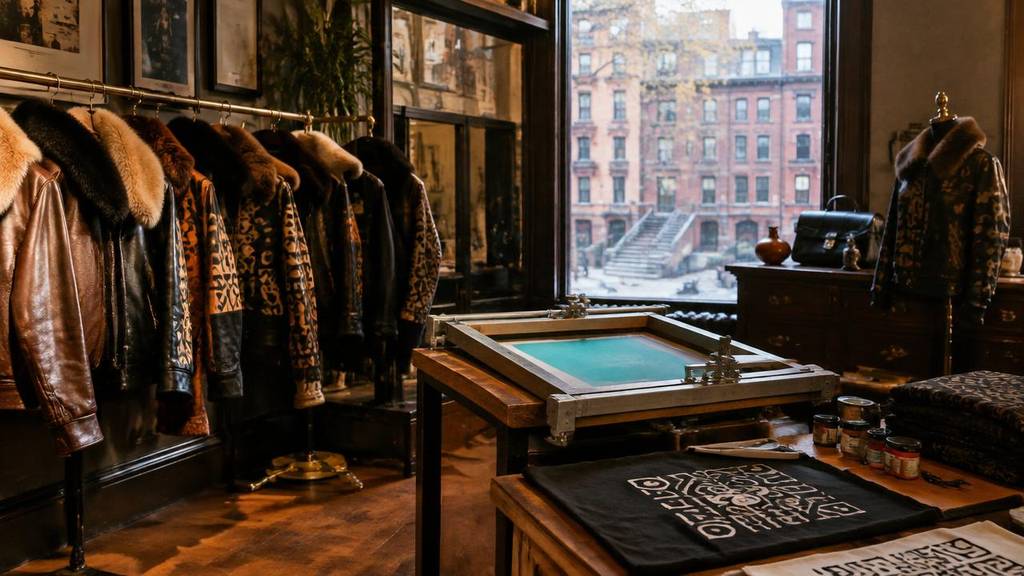
The crucial technical move was developing methods to print luxury-style logos onto leather and other materials, then turn those surfaces into custom garments. He worked with skilled tailors and other makers, including African immigrant craftspeople; self-directed design did not mean single-handed production. Jackets, tracksuits, coats, and car interiors could become expansive fields of monogrammed display. These pieces were not ordinary copies of an existing European outfit. Their silhouettes, scale, and combinations expressed a different social world. At the same time, the unauthorized use of protected trademarks created genuine legal exposure. Creative transformation and trademark permission were separate questions, however influential the results became.
The clientele made the work visible well beyond the shop. Performers including Eric B. & Rakim, LL Cool J, and Salt-N-Pepa helped connect the boutique with the emerging visual language of hip-hop. Athletes and neighborhood customers were also central to its business. In 1988, a confrontation involving Mike Tyson outside the shop drew additional attention to the operation. The store's long hours matched a clientele whose lives did not follow department-store schedules. This was customer research carried out through repeated fittings, conversations, and transactions. Day could see which details delivered status because the people buying them were close enough to respond directly.
Trademark enforcement and raids eventually forced the boutique to close in 1992. The closure did not erase the garments' influence, but it did remove the public retail platform that had supported them. Day continued working privately for clients. The gap between cultural authorship and institutional reward became a defining part of his story: luxury houses protected their marks while streetwear increasingly reshaped luxury's own aesthetic ambitions. That history should not be flattened into a simple claim that legal restrictions disappeared because the work was original. His practical problem was precisely that an influential visual language could remain commercially vulnerable when it depended on marks he did not own.
In 2017, a Gucci runway jacket resembling a balloon-sleeved design Day had made for Olympic sprinter Diane Dixon reignited debate about credit and appropriation. Gucci acknowledged the reference, and a relationship followed that included an official collaboration and a Harlem atelier opened in 2018. The reversal was striking: a designer once pursued over luxury branding now worked with an authorized luxury partner. His achievement was not belated permission to have mattered. It was the earlier invention of a persuasive customer-centered language. His career offers a powerful method—observe a neglected audience, solve its expressive needs, and develop production around it—alongside a clear warning to secure rights wherever possible.
The Cheat Code: shortcuts that worked
1. Cheat Code: Let the Ignored Customer Set the Brief
Ask what an underserved audience wants to communicate through clothes before deciding what established fashion says it should want.
2. Cheat Code: Treat the Fitting as Field Research
Use direct conversations about status, movement, and occasion to refine a custom garment instead of relying only on trend reports.
3. Cheat Code: Change the Product Category
Study how Day translated luxury's visual codes into tracksuits and oversized outerwear rather than reproducing its existing catalog.
4. Cheat Code: Own the Marks You Scale
Separate cultural inspiration from trademark authorization. Develop original identifiers or secure licenses before building a business around protected branding.
Your plan to do the same
- Interview members of one overlooked clothing audience about the occasions their wardrobes fail to serve.
- Document preferred fit, color, visibility, and status signals without treating the group as a single stereotype.
- Work with an experienced tailor to build one custom piece around those requirements.
- Experiment with original surface graphics using safe, appropriate textile-printing methods.
- Photograph the garment in its intended social setting and gather feedback from the wearer.
- Review trademarks, permissions, collaborator credit, and production terms before offering a repeatable collection.
Frequently asked questions
Did Dapper Dan attend fashion school?
Dapper Dan did not follow a conventional fashion-school route. He developed his practice through close observation of Harlem style, travel, material experiments, and custom work. Skilled tailors and makers helped realize his designs. His career illustrates self-directed creative leadership supported by collaborative technical expertise, not production without training.
Why did Dapper Dan's original boutique close?
His Harlem boutique closed in 1992 after years of trademark enforcement over unauthorized luxury branding. Although the garments transformed those visual codes into distinctive designs, their originality did not provide automatic permission to use protected marks. He continued serving private clients after losing the original public storefront.
How did Dapper Dan end up working with Gucci?
In 2017, a Gucci design resembling his earlier jacket for Diane Dixon prompted public discussion about influence and credit. Gucci acknowledged the reference, and a formal partnership followed. An authorized collaboration and a Harlem atelier opened in 2018 turned a previously adversarial relationship with luxury branding into an institutional alliance.