
Business · Wendy's founder and restaurant operator
Dave Thomas Learned the Restaurant Business One Shift at a Time
Before he became the face of Wendy's, he learned to cook, simplify menus, and make struggling restaurants work.
How did Dave Thomas succeed?
Dave Thomas succeeded by turning years of hands-on restaurant work into a tightly focused operating system. He learned cooking, service, and cost control before reviving struggling KFC restaurants. With Wendy's, he differentiated a familiar product through fresh beef, made-to-order preparation, a limited menu, and consistent execution rather than culinary credentials.
The story
Dave Thomas's business education began behind restaurant doors, not at a hospitality school. Born in Atlantic City in 1932 and adopted as an infant, he experienced a childhood marked by moves and family disruption. At twelve, he worked at Regas Restaurant in Knoxville. Later, the Hobby House restaurant in Fort Wayne, Indiana, became a more lasting anchor. When his father prepared to move again, Thomas stayed behind to keep working. He left high school at fifteen, choosing the stability and practical demands of restaurant employment over another uncertain relocation.
The work was not glamorous, but it was cumulative. A restaurant exposed him to food preparation, customer expectations, staffing, cleaning, and the consequences of a badly organized shift. During service in the United States Army in the early 1950s, Thomas worked in food service in Germany, adding large-scale meal preparation to his experience. He returned to the Hobby House afterward. By the time an ownership opportunity arrived, he had already spent years learning how kitchens behaved under pressure and how small operating decisions affected the guest's experience.
The decisive assignment came in 1962, when Hobby House owner Phil Clauss sent Thomas to Columbus, Ohio, to improve four struggling Kentucky Fried Chicken restaurants. Thomas had encountered Colonel Harland Sanders through the business and understood the appeal of a recognizable product. He reduced the restaurants' sprawling menus and concentrated attention on chicken. A narrower menu meant fewer distractions for employees, clearer expectations for customers, and a simpler purchasing problem. The turnaround gave him something more valuable than a motivational story: evidence that disciplined operations could change the economics of existing locations.
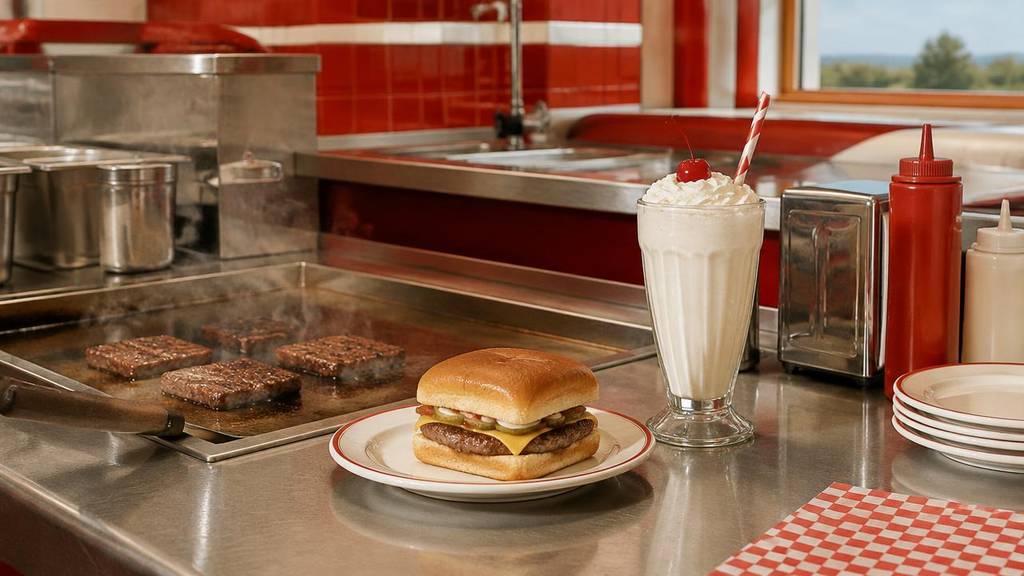
In 1968, Thomas sold his interest in those restaurants and emerged a millionaire. He could have remained an investor in someone else's system. Instead, he noticed an opening in Columbus for a hamburger restaurant offering the product he wanted to eat. The first Wendy's opened on November 15, 1969, at 257 East Broad Street. He named it for his daughter Melinda Lou, whose nickname was Wendy. Its square hamburger patties offered immediate visual distinction, while fresh beef and preparation to order supported a position above the cheapest fast-food alternatives.
The original proposition was deliberately understandable: hamburgers, chili, fries, beverages, and the Frosty. Thomas did not need to teach customers an unfamiliar cuisine. He needed to make a familiar meal feel worth choosing. Chili also created a practical outlet for cooked hamburger meat, linking menu design to kitchen economics rather than treating every item as a separate invention. A second restaurant opened in 1970 and included a drive-through pickup window. As the chain expanded, speed and convenience had to coexist with the promise that the food would not simply sit waiting.
Thomas stepped away from daily management in 1982, but his most visible role was still ahead. Beginning in 1989, he appeared in Wendy's television advertising, eventually making more than 800 commercials. His delivery was plain rather than polished, and that became an advantage: the founder looked like someone who knew the grill better than the boardroom. Meanwhile, his own school departure remained a source of concern. In 1993, he earned his GED through Coconut Creek High School in Florida, emphasizing that his personal success should not be read as advice to abandon education.
His legacy extended beyond burgers. Thomas established the Dave Thomas Foundation for Adoption in 1992, connecting his public standing to his experience as an adopted child. The commercial lesson remains grounded in the work itself. He accumulated operational knowledge before assuming ownership, proved his judgment in a turnaround, and launched a concept customers could understand immediately. Wendy's did not emerge from an abstract theory about disruption. It grew from a restaurant worker's ability to notice where menus became cumbersome, service became careless, and an ordinary hamburger could be made meaningfully better.
The Cheat Code: shortcuts that worked
1. Cheat Code: Use a Turnaround as Paid Training
The Columbus KFC assignment let Thomas test menu simplification inside an existing operation. Look for a troubled unit where improvement can be measured before building a new brand.
2. Cheat Code: Make the Menu Share Ingredients
Wendy's chili connected product choice with kitchen economics. Design a small menu whose ingredients have complementary uses without compromising food safety or quality.
3. Cheat Code: Give a Familiar Product a Visible Signature
Square patties made Wendy's burgers recognizable. Find a genuine product distinction customers can see, then ensure the eating experience supports the visual promise.
4. Cheat Code: Put the Operator on Camera
Thomas's straightforward commercials made operating experience part of the brand. Explain your product in the voice of the person responsible for delivering it.
Your plan to do the same
- Work complete restaurant shifts across preparation, service, cleaning, and closing.
- Measure which menu items generate complexity without sufficient sales.
- Test a reduced menu in one location and compare waste, speed, and customer response.
- Define one recognizable product feature that survives busy service periods.
- Document how ingredients move through purchasing, storage, preparation, and disposal.
- Build marketing around specific operating promises that staff can consistently fulfill.
Frequently asked questions
Did Dave Thomas finish high school?
Thomas left high school at fifteen while working in Fort Wayne, Indiana. He later returned to education and earned his GED in 1993. He did not present dropping out as a formula for success; his later educational milestone reflected concern that young people might misinterpret his unusual career.
Did Dave Thomas work for Colonel Sanders?
Thomas worked with the Kentucky Fried Chicken franchise system before founding Wendy's. In 1962, restaurateur Phil Clauss assigned him to improve four struggling KFC restaurants in Columbus. Thomas simplified their operations and menus, then sold his interest in 1968, gaining the capital that helped make his next venture possible.
Who was Wendy's named after?
Wendy's was named after Thomas's daughter Melinda Lou, known in the family as Wendy. The first restaurant opened in Columbus, Ohio, on November 15, 1969. The family connection supported a personal brand, but the business depended on its food proposition, focused menu, and repeatable restaurant operations.