
Business · IKEA founder and low-cost retail strategist
Ingvar Kamprad Made Furniture Cheaper by Redesigning the Business
His breakthrough was not a single chair. It was a system in which design, packaging, transport, and shopping reinforced one another.
How did Ingvar Kamprad succeed?
Ingvar Kamprad succeeded by organizing furniture retail around affordability rather than conventional store practices. He combined direct selling, catalogs, showrooms, flat-pack transport, and customer assembly with close supplier relationships. Each change removed costs from the system, allowing IKEA to offer distinctive home furnishings to customers traditional furniture retailers often priced out.
The story
Ingvar Kamprad was born in 1926 and grew up in Småland, a Swedish region associated with resourcefulness and thrift. As a boy, he sold matches and later other small goods, learning that buying economically and reaching customers directly could leave a margin even at low prices. In 1943, at seventeen, he founded IKEA. The name combined his initials with Elmtaryd, the family farm, and Agunnaryd, the nearby village. There was no formal retail-management qualification behind the enterprise. His starting knowledge came from small transactions and close observation of what neighbors would buy.
Early IKEA sold assorted goods rather than presenting a fully developed furniture concept. Furniture entered the range in 1948, and the first IKEA catalog appeared in 1951. The catalog allowed the company to explain products and prices across distance without maintaining a conventional shop in every market. Yet low prices also created a credibility problem: a picture could not prove that a chair was comfortable or a table solid. The next important step was not louder advertising. It was finding a way for customers to inspect the offer before placing their confidence in it.
In 1953, IKEA opened a furniture showroom in Älmhult. Customers could compare what the catalog promised with what the furniture actually felt like. The combination joined the reach of mail order with the reassurance of physical inspection. It also gave IKEA direct feedback about how people evaluated household purchases. Kamprad's developing method treated distribution, presentation, and product choice as one connected problem. Selling more cheaply required more than negotiating a discount from a supplier; it required redesigning the customer's entire route from interest to purchase.
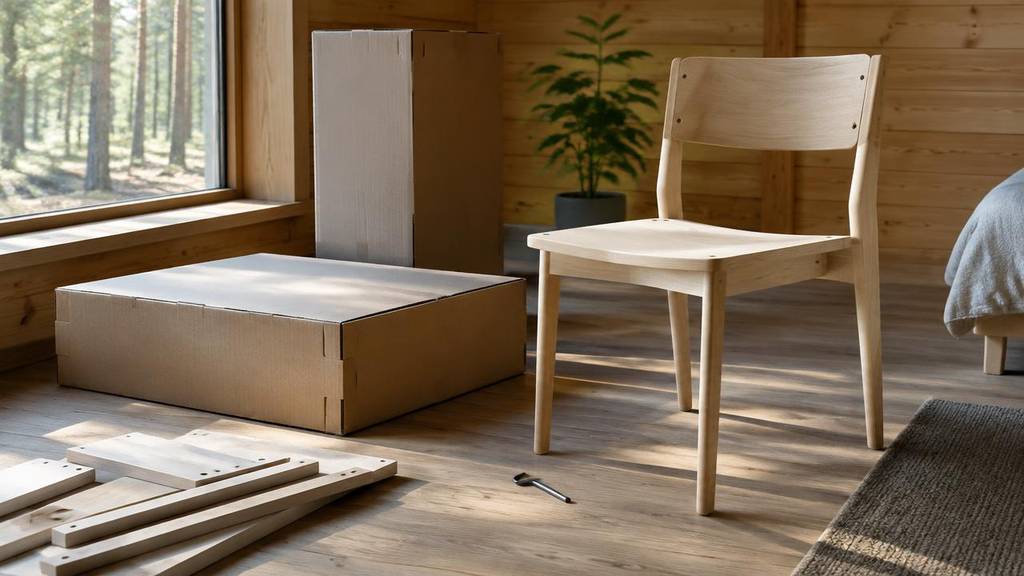
Flat-pack furniture became another crucial part of the system in the mid-1950s. IKEA's history associates a formative moment with employee Gillis Lundgren removing a table's legs so it would fit into a car. The broader principle was powerful: assembled furniture contained large volumes of expensive empty space. Packaging components compactly reduced transport and storage requirements and could limit damage. Customer assembly shifted some work beyond the factory and store, creating savings while also asking buyers to contribute effort. The bargain worked only if price, design, instructions, and component quality made that effort worthwhile.
Established furniture interests resisted IKEA, including pressure on suppliers. Rather than treating the existing supply network as permanent, the company developed alternatives abroad. Relationships with Polish manufacturers became especially important from the early 1960s. The first full IKEA store opened in Älmhult in 1958, and international expansion began with Norway in 1963. Each move depended on protecting the underlying economics. A low shelf price was not enough if freight, handling, damaged stock, or inefficient production quietly consumed the margin before a customer took the furniture home.
Kamprad helped institutionalize a culture of cost awareness, plain language, and attention to ordinary households. IKEA's stores, catalogs, product design, food service, and self-service practices developed into a distinctive retail ecosystem, though not all appeared at once or originated with him personally. His biography also includes a serious moral failure: youthful involvement in Sweden's fascist movement, for which he later expressed regret. That history should not disappear behind stories of inexpensive furniture or personal frugality. A company's commercial ingenuity is not a comprehensive judgment on its founder's life.
By Kamprad's death in 2018, IKEA had become a global force in home furnishing. The useful lesson is not to copy Swedish names or make customers assemble any product you happen to sell. It is to follow costs across the entire chain and ask which arrangements customers would willingly change in return for a better price. Kamprad learned through trading and iteration, while designers, buyers, suppliers, and store teams converted that philosophy into practice. IKEA's advantage came from the fit among its parts, making isolated imitation much harder than it first appeared.
The Cheat Code: shortcuts that worked
1. Cheat Code: Sell the Empty Space Back
Flat packs reduced the cost of shipping bulky assembled furniture. Measure how much of your freight and storage bill pays for air, awkward shapes, or protective handling.
2. Cheat Code: Pair Remote Reach with Physical Proof
The showroom answered doubts created by catalog selling. Identify the one feature customers need to inspect and provide a focused way to verify it.
3. Cheat Code: Make Customer Effort a Fair Trade
IKEA exchanged assembly and self-service effort for lower prices. Ask customers to do work only when the savings are meaningful and the task is clearly supported.
4. Cheat Code: Redesign the Supplier Map
Supplier resistance pushed IKEA toward alternative manufacturing relationships. Build supply options before an incumbent network can determine the limits of your business.
Your plan to do the same
- Choose a household purchase whose total delivered price excludes many potential buyers.
- Calculate product, packaging, storage, freight, damage, and retail handling costs separately.
- Prototype a design that occupies less space without weakening its intended function.
- Let customers inspect a sample and attempt assembly using only the supplied instructions.
- Source production partners capable of meeting both quality and price requirements.
- Test the complete buying experience rather than judging success by the factory price alone.
Frequently asked questions
Did Ingvar Kamprad invent flat-pack furniture?
No. Knock-down furniture existed before IKEA. Kamprad's company made flat packaging central to an integrated mass-market retail model. IKEA credits employee Gillis Lundgren with an influential table-packing moment, but the business advantage came from combining compact transport with product design, supplier coordination, self-service shopping, and customer assembly.
What does IKEA stand for?
IKEA combines Ingvar Kamprad's initials with the first letters of Elmtaryd, the farm where he grew up, and Agunnaryd, the nearby village. He founded the business in 1943 at seventeen. The name predates IKEA's furniture specialization and reflects the small local origins of the later international retailer.
How did Ingvar Kamprad keep IKEA prices low?
Kamprad pursued savings across the whole business rather than relying on one discounting tactic. Catalog selling, efficient sourcing, flat packs, self-service, customer transport, and assembly all contributed. These choices reinforced one another, although affordability still depended on furniture that customers considered useful, attractive, and worth the effort.