
Entrepreneurship · Tidying consultant, author, and creator of the KonMari Method
Marie Kondo Turned Tidying Into a System People Could Follow
The breakthrough was not a better storage box. It was a sequence for making decisions about an entire household.
How did Marie Kondo succeed?
Marie Kondo succeeded by turning years of personal experimentation and client work into a distinctive, teachable tidying system. She organized decisions by category, emphasized choosing what to keep, and gave the process memorable language. Books, television, and consultant training helped the KonMari Method travel beyond her own appointments.
The story
Marie Kondo made a domestic question feel newly consequential: not where should this object go, but do I want it in my life? Born in Tokyo on October 9, 1984, she became interested in organizing while still a child. Household magazines and repeated attempts to straighten cupboards supplied an informal curriculum. That origin matters because her later method did not emerge from a professional organizing degree. It grew from unusually sustained attention to a common frustration. Rooms could be tidied repeatedly and still return to disorder, suggesting that moving possessions was not the same as resolving them.
Kondo has described a youthful emphasis on finding things to discard before shifting toward identifying what she wanted to retain. That reversal became the emotional center of the KonMari Method. Instead of making deprivation the objective, she asked clients to evaluate their relationship with possessions. She began a tidying consultancy at 19 while studying at Tokyo Woman's Christian University. Her university education should not be confused with formal training in professional organizing. The relevant expertise developed through personal experimentation and hands-on work with clients, where an attractive theory had to survive crowded rooms and difficult decisions.
Her first book appeared in Japan in 2010. The English-language edition, The Life-Changing Magic of Tidying Up, followed in 2014 and carried the method to a much wider audience. The title promised more than a neat closet, but the instructions were concrete. Work by category rather than room. Bring similar possessions together so their total quantity becomes visible. Begin with clothing, then proceed through books, papers, miscellaneous belongings, and sentimental items. The order was part of the teaching: practice decisions on comparatively approachable objects before attempting possessions loaded with memory.
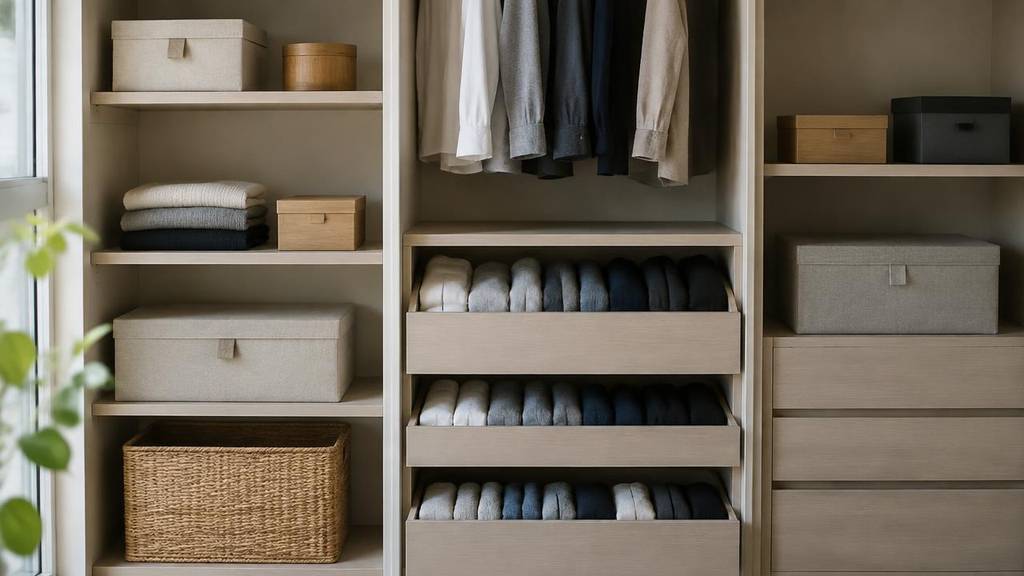
The question of whether an object sparks joy supplied a memorable decision rule, but Kondo's system also depended on less glamorous logistics. Clothing folded into compact shapes could stand upright in drawers, making individual items easier to see. Storage followed selection rather than substituting for it. A household could buy endless containers without deciding what belonged in them, so the method resisted treating shopping as the first solution. The combination of emotional language and visible technique helped explain its reach. Readers received both a reason to change their habits and a physical action they could try immediately.
Netflix released Tidying Up with Marie Kondo in 2019, showing the method inside American homes. Television made the human stakes more apparent: possessions were connected to relationships, bereavement, family routines, and competing ideas of comfort. A second series, Sparking Joy, arrived in 2021. Meanwhile, consultant certification allowed other practitioners to teach the approach. This was a consequential business move because Kondo's own time could not expand indefinitely. A named system, an established sequence, and recognizable practices made it possible to distribute instruction without requiring her presence in every closet or living room.
Kondo's example is often flattened into minimalism, as if success meant owning the fewest things. Her stated organizing principle is more personal: retain possessions that support the life you want. That does not make every decision easy or every method appropriate for every household. It does explain why her teaching stood apart in a crowded advice market. She turned an overwhelming activity into bounded categories, supplied a test for individual decisions, and delayed the most emotionally demanding material. For a self-directed learner, the broader lesson is to make judgment practiceable, not merely to offer a prettier final photograph.
The Cheat Code: shortcuts that worked
1. Cheat Code: Make the Whole Category Visible
Gather one category from every room before sorting it. Seeing the total exposes duplicates and prevents a tidy drawer from hiding an unresolved household-wide problem.
2. Cheat Code: Practice Decisions on Clothing
Start with garments before confronting letters, photographs, and keepsakes. Easier choices help you recognize preferences before emotional complexity rises.
3. Cheat Code: Choose Before Buying Storage
Decide what remains before purchasing containers. Otherwise, storage can preserve indecision while making clutter look temporarily more organized.
4. Cheat Code: File Clothing Vertically
Try folding suitable garments so they stand upright in drawers. Visibility makes it easier to choose clothing and notice when the system needs attention.
Your plan to do the same
- Describe the daily life you want your home to support.
- Gather all clothing into one sorting area rather than working closet by closet.
- Handle each item and decide whether it belongs in that intended life.
- Proceed through books, papers, miscellaneous items, and finally sentimental possessions.
- Assign retained items clear homes and test vertical folding where appropriate.
- Review whether your arrangement supports retrieval and return, not merely an attractive photograph.
Frequently asked questions
Is Marie Kondo a minimalist?
Kondo's method is not defined by reaching the smallest possible number of possessions. It asks people to choose what supports their desired lives and brings them joy. A substantial collection can fit that approach. The central question is the owner's relationship with the objects, not an externally imposed numerical limit.
What is the correct KonMari category order?
The standard order is clothing, books, papers, komono or miscellaneous items, and sentimental possessions. Kondo places emotionally difficult belongings last so people can develop decision-making confidence first. Sorting by category across the home also reveals quantities and duplicates that room-by-room cleaning can leave hidden from view.
How did Marie Kondo become an organizing consultant?
Kondo developed a childhood interest in tidying through repeated experimentation, then began consulting at 19 while attending university in Tokyo. Client work helped shape her system before her first Japanese book appeared in 2010. Her organizing expertise grew through practice rather than a professional organizing degree program.