
Filmmakers · Director, producer, and practical-effects enthusiast
Peter Jackson Built Middle-earth's Foundations in Homemade Movies
His breakthrough began with friends, homemade effects, and a project that kept growing. The bigger achievement was learning how to turn local ingenuity into a durable production community.
How did Peter Jackson succeed?
Peter Jackson succeeded by making practical-effects experiments, completing a homemade feature, and building long-term creative partnerships in New Zealand. Without film school, he learned through production itself. Bad Taste opened international doors, while later films and collaborators helped establish the skills and infrastructure behind The Lord of the Rings.
The story
Peter Jackson was born in New Zealand in 1961 and grew up near Wellington. Childhood encounters with films, especially the 1933 King Kong, helped turn an interest in spectacle into a desire to construct it. He experimented with a family movie camera, models, and stop-motion rather than following a film-school curriculum. These beginnings are easy to romanticize as evidence that talent arrives fully formed. The more useful detail is physical: a miniature must stay in place, movement must register one frame at a time, and an effect that works in the imagination may collapse when photographed. Making things supplied immediate correction.
After leaving school, Jackson worked in newspaper production while continuing to pursue movies. Bad Taste began shooting in 1983 and expanded into a feature over roughly four years, much of it made during weekends with friends. Jackson took on directing, camera work, effects, and an acting role. The film's alien-invasion premise invited grotesque homemade invention, but its completion required something less glamorous than invention: returning to the project repeatedly. Weather, employment, performer availability, and continuity all complicated production. The long schedule was not an efficient model to copy indiscriminately. It was a demonstration of how persistence could turn scattered experiments into a finished feature.
The New Zealand Film Commission eventually supported the completion of Bad Taste, which reached the Cannes film market in 1987 and found international buyers. That institutional assistance matters in a story often told as pure do-it-yourself independence. Jackson supplied a distinctive project and substantial completed work; outside support helped carry it over the finish line and into distribution. Meet the Feebles in 1989 and Braindead, also known as Dead Alive, in 1992 continued his attraction to unruly comedy, puppetry, and elaborate practical effects. Each production demanded a team. The local network of collaborators was becoming as important as his personal resourcefulness.
Heavenly Creatures in 1994 marked a major change in how the industry perceived him. Co-written with Fran Walsh, the film dramatized the 1954 Parker–Hulme murder case while using fantasy imagery to convey its central relationship. It earned Jackson and Walsh an Academy Award nomination for original screenplay. The film showed that his visual imagination could serve psychological intimacy rather than only splatter comedy. It also demonstrated the importance of writing partnerships and performances. A filmmaker's technical signature can open a door, but emotional and dramatic range determine what lies beyond it. Jackson's career was expanding because the films themselves were expanding.
The Frighteners in 1996 brought a larger international production and more extensive digital-effects demands. Weta's development, involving key figures including Richard Taylor and Jamie Selkirk, helped make Wellington an increasingly capable filmmaking center. The Lord of the Rings trilogy then required a different order of coordination: adaptations, design, miniatures, locations, costumes, visual effects, and a long principal-photography schedule beginning in 1999. Jackson worked with Walsh and Philippa Boyens on the screenplays. What looked to audiences like one director's vast vision depended on systems that allowed thousands of individual decisions to remain coherent across three connected films.
The Fellowship of the Ring opened in 2001, followed by The Two Towers in 2002 and The Return of the King in 2003. The final installment won all 11 Academy Awards for which it was nominated, including directing for Jackson. Those numbers make a dramatic destination, but they do not explain the route by themselves. The continuity lies in building: first an effect, then a feature, then partnerships, then a production ecosystem. Jackson did not simply scale up a hobby camera. He learned when personal improvisation had to become shared process. His alternative education succeeded because it produced both films and the capacity to make the next ones.
The Cheat Code: shortcuts that worked
1. Cheat Code: Prototype the Creature at Home
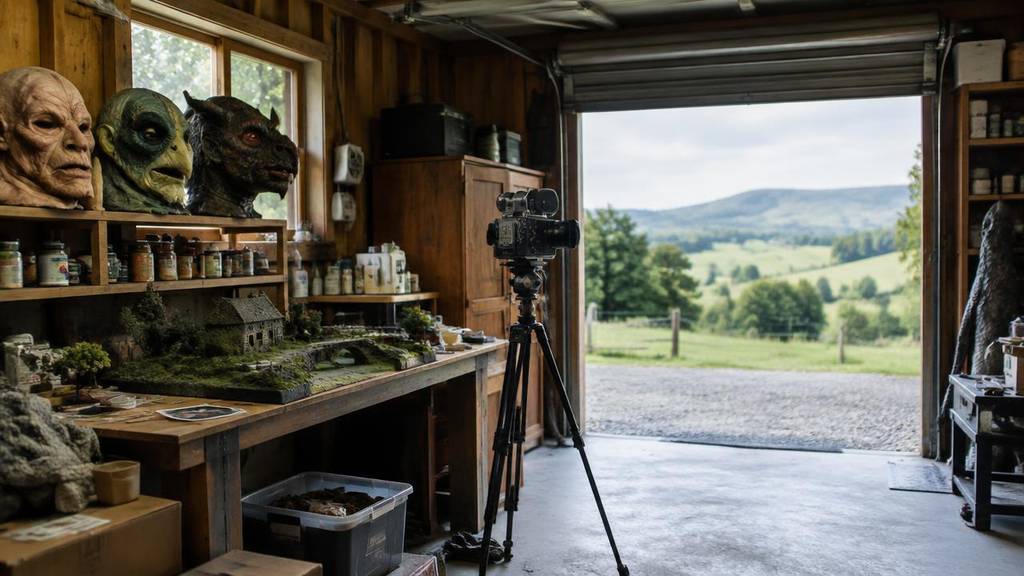
A small practical-effects test reveals silhouette, texture, and movement problems before a creature becomes a major production commitment.
2. Cheat Code: Turn Weekend Access Into a Production Design
Write around locations and collaborators you can revisit, while tracking continuity carefully enough that separate weekends can form one believable scene.
3. Cheat Code: Use a Tonal Pivot to Prove Range
Heavenly Creatures demonstrated capacities beyond Jackson's early horror comedies. Develop a project that tests the emotional skill your existing work has not shown.
4. Cheat Code: Build the Workshop, Not Just the Shot
Repeat collaborators and documented methods make ambitious work reproducible. Invest in relationships and processes that survive a single production.
Your plan to do the same
- Design a one-minute creature scene that can be filmed in one accessible location.
- Build a miniature or practical effect and test it under the intended lighting.
- Recruit a small recurring crew and assign clear responsibilities.
- Schedule two short shoots with a continuity log for props, wardrobe, and camera positions.
- Finish the scene, then write a contrasting dramatic scene that requires no effects.
- Use both pieces to identify collaborators for a larger project with a realistic completion plan.
Frequently asked questions
Did Peter Jackson go to film school?
No. Jackson learned filmmaking through childhood experiments, practical-effects work, and independent productions in New Zealand. His first feature, Bad Taste, developed over years of largely weekend shooting. Later professional collaborations and institutional support expanded that informal education into a sustainable feature-film career.
How long did Peter Jackson take to make Bad Taste?
Bad Taste was made over roughly four years, beginning in 1983 and reaching international attention in 1987. Jackson worked around employment and collaborators' availability, handling several production roles himself. The New Zealand Film Commission later helped finance completion, making the finished film more than an entirely unsupported backyard effort.
What connected Peter Jackson's early horror films to The Lord of the Rings?
The connection was not simply a taste for creatures. Early films developed Jackson's practical-effects experience, production persistence, and network of collaborators. Subsequent projects, including Heavenly Creatures and The Frighteners, broadened his dramatic and technical capabilities while Wellington's filmmaking infrastructure grew toward the demands of the trilogy.