
Entrepreneurship · Fashion entrepreneur and founder of Ralph Lauren
Ralph Lauren Sold a World Before He Sold a Full Wardrobe
A tie salesman without a fashion degree learned to make one accessory suggest an entire way of living.
How did Ralph Lauren succeed?
Ralph Lauren succeeded by combining retail experience with a distinctive visual world, beginning with wide ties that challenged prevailing styles. Without formal fashion training, he learned through selling, product development, and collaboration, then expanded Polo into coordinated clothing and lifestyle categories that reinforced a recognizable identity rather than isolated trends.
The story
Ralph Lauren was born Ralph Lifshitz in the Bronx in 1939, far from the country estates and sporting clubs his brand would later evoke. He attended Baruch College but left without completing a degree, then served in the United States Army from 1962 to 1964. His education in clothing came through selling it and observing how presentation affected desire. He worked in menswear, including at Brooks Brothers, and later sold ties. There was no formal fashion-school training behind the early venture. He learned the commercial language of fabric, proportion, customer preference, and retail attention on the job.
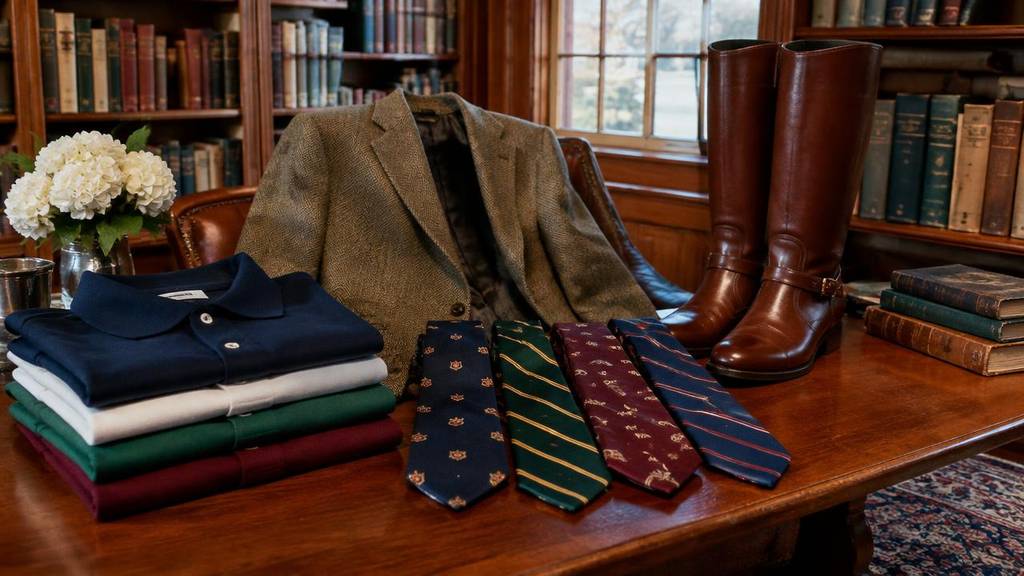
The first opening was narrow in category but bold in appearance. In the 1960s, Lauren wanted to sell wider ties at a time when narrower styles were common. The ties used substantial fabrics and carried a more expressive look than a purely functional neckwear purchase required. While working with tie manufacturer Beau Brummell, he gained the chance to develop his own line. He launched Polo ties in 1967. The name borrowed associations from a sport rather than describing the object itself. From the beginning, the product suggested a setting and attitude beyond the small piece of clothing on the rack.
Lauren sold to stores while learning what it took to preserve that identity in a commercial setting. Accounts of his early relationship with Bloomingdale's describe resistance to demands that would dilute his presentation, including pressure around labeling and the look of the ties. The larger point is not that a founder should reject every retailer request. Lauren believed the name, styling, and product belonged together. If the item became anonymous, its long-term value could shrink to whatever a store was willing to pay for another tie. He was developing a brand, not merely supplying an interchangeable accessory.
In 1968, he introduced a full menswear collection. Expansion gave the original idea room to become visible across an outfit rather than only at the collar. The clothes drew on a mix of references: English tailoring, American collegiate style, sporting clothes, and the romance of a more expansive life. These influences were not a documentary account of Lauren's own upbringing. They were materials for an imagined world customers could enter. He relied on experienced people to turn that vision into garments. His strength was recognizing whether the result belonged to the world he was building, not personally performing every technical production task.
Recognition arrived quickly. Lauren won a Coty Award for menswear in 1970. A standalone Beverly Hills store opened in 1971, and the early 1970s brought important moves into women's clothing. In 1972, the short-sleeved mesh Polo shirt appeared in a broad range of colors, with the embroidered polo player becoming a powerful identifying mark. The shirt translated the brand into an everyday item that could travel well beyond a complete tailored outfit. Its success showed how a coherent identity can live in a relatively accessible product without requiring every customer to buy the entire fantasy at once.
Film and imagery deepened the association between clothes and a recognizable atmosphere. Lauren supplied menswear for the 1974 film The Great Gatsby, connecting the label with an especially vivid version of American elegance. Advertising likewise emphasized settings, characters, and moods, not just isolated garments against a blank background. The business expanded into categories including home furnishings, introduced in 1983. This was not random logo application if the execution remained coherent: rooms, clothing, and accessories could reinforce the same imagined life. The risk, always present in expansion, was that too many products might weaken the very specificity that made the name valuable.
The company went public in 1997. Lauren stepped down as chief executive in 2015 while continuing in creative and leadership roles. By then, his name represented an international business rather than a salesman carrying samples. The useful lesson is not that credentials never matter or that taste alone can run a company. He combined a clear aesthetic with retail experience, capable collaborators, product discipline, and repeated translation across categories. He began with one item he could sell, then used it to establish a world customers recognized. The wardrobe grew because the point of view came first.
The Cheat Code: shortcuts that worked
1. Cheat Code: Put the Whole World in One Tie
Lauren's first category was small enough to launch but expressive enough to carry an identity. Choose an entry product that makes your broader point of view visible immediately.
2. Cheat Code: Name the Aspiration, Not the Object
Polo suggested a social and sporting world rather than neckwear. Develop a name whose associations fit your intended identity, then verify trademarks before investing in it.
3. Cheat Code: Protect the Label That Creates the Margin
Lauren resisted becoming an anonymous supplier. Distinguish negotiable retail details from the name, quality, and presentation that let customers recognize and seek out your work.
4. Cheat Code: Expand the Scene, Not Just the Catalog
Clothing and home furnishings could inhabit the same Ralph Lauren world. Add a category only when you can explain how its materials, styling, and customer use reinforce the existing identity.
Your plan to do the same
- Assemble twelve reference images that express one coherent world, noting colors, materials, settings, and recurring proportions.
- Choose a single affordable-to-prototype product that can communicate that world without a long explanation.
- Write a product brief specifying fabric or material, shape, finish, target customer, and maximum production cost.
- Ask an experienced maker to produce one sample and identify where your design is impractical.
- Photograph the sample in a setting that expresses its intended identity, then pitch five closely matched shops or customers.
- Define three nonnegotiable brand elements and test a second product only after buyers can describe what makes the first recognizable.
Frequently asked questions
Did Ralph Lauren go to fashion school?
No. Ralph Lauren did not receive formal fashion-school training. He attended Baruch College without completing a degree and gained practical experience in menswear sales. He developed his business through retail observation, product judgment, collaboration with skilled makers, and an increasingly distinctive approach to presenting clothing.
What was Ralph Lauren's first product?
Lauren began the Polo business with men's ties in 1967. His wider ties and substantial fabrics offered a distinctive alternative to prevailing styles. A full menswear collection followed in 1968, allowing the identity suggested by the ties to expand into coordinated outfits and a broader brand.
When did Ralph Lauren introduce the Polo shirt?
The now-famous short-sleeved mesh Polo shirt arrived in 1972 in a wide selection of colors. Its embroidered polo-player emblem became a major brand identifier. Lauren did not invent the general polo-shirt category; his achievement was making a particular version central to a recognizable and commercially powerful lifestyle brand.