
Entrepreneurship · Creator of Dad, how do I?
Rob Kenney Made Basic Life Skills Feel Safe to Ask About
A tie, a tire, a clogged drain: his subjects were ordinary. The absence he addressed was not.
How did Rob Kenney succeed?
Rob Kenney succeeded by pairing straightforward life-skill demonstrations with the reassurance of a patient father figure. Drawing on practical experience rather than formal trade credentials, he launched Dad, how do I? in 2020. Clear answers, a personal origin story, and nonjudgmental delivery helped his videos reach a large audience.
The story
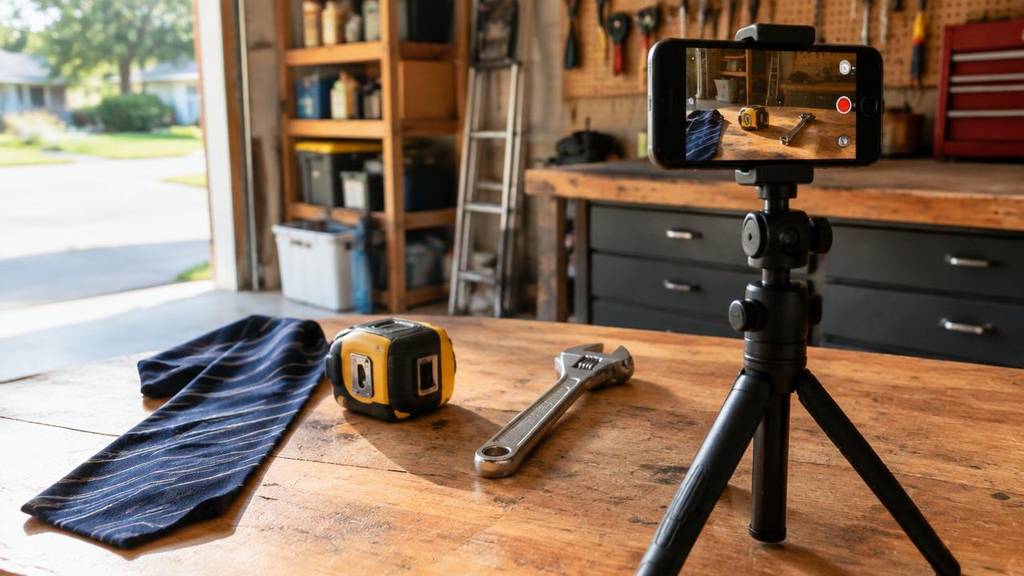
In April 2020, as pandemic restrictions pushed more daily life into homes, Rob Kenney began posting videos under a question that already sounded personal: Dad, how do I? The channel addressed tasks that many adults are expected to know but may never have been shown. How do you tie a tie? How do you check a car's oil? The novelty was not the existence of instructions online. It was the relationship implied by the title. A viewer could arrive uncertain or embarrassed and encounter a presenter who treated the question as entirely reasonable.
Kenney has publicly connected the project to his own childhood. His father left when he was 14, and an older brother helped raise him. That experience shaped his determination to be present for his own children and later informed the channel's premise. He did not claim that a short video could replace a parent. Instead, he offered one modest part of what a patient adult might provide: an explanation delivered without ridicule. The distinction gave the project emotional clarity. Practical teaching and reassurance were not competing functions; the reassurance helped make the practical lesson accessible.
Before launching the channel, Kenney had accumulated everyday knowledge through adult life, work, home maintenance, and raising a family. He was not presenting himself as a licensed expert in every trade. The teaching authority was deliberately narrower: here is a basic task I can show you. His daughter encouraged the project, and he began recording demonstrations that required relatively little production machinery. This matters to the self-directed-learning story. He did not need to establish an elaborate studio or a comprehensive curriculum before helping someone. He needed a useful question, an understandable demonstration, and the willingness to begin.
The channel attracted widespread attention within weeks of its launch. News coverage emphasized both the practical subjects and Kenney's family history. Viewers also responded to his warmth, dad jokes, and familiar style of address. A task such as tying a necktie contains several small opportunities for confusion: orientation, hand placement, which section crosses where, and how the knot tightens. An effective demonstration makes those transitions observable. Kenney's appeal came from treating such details as worth showing, rather than assuming that anyone who missed the first explanation should already have known the answer.
His 2021 book, Dad, How Do I?, extended the project into print with practical advice and personal reflection. The broader identity was never limited to mechanical instruction. Encouragement and conversations about adulthood sat beside maintenance tasks. That mixture helped distinguish the channel from an anonymous repair archive, but it also created a responsibility to keep the advice appropriately bounded. Household and automotive work varies in risk. A friendly presenter cannot make electrical hazards, unstable lifting equipment, or an unfamiliar repair safe merely through confidence. The strongest version of the format helps a viewer recognize when to stop.
Kenney's success is best understood as the removal of a social barrier to learning. Many people can search for instructions; fewer feel comfortable admitting what they never learned. By putting a caring role in the channel's name, he made that admission part of the premise rather than a source of shame. His example does not require pretending to know every answer. It suggests choosing skills you can demonstrate accurately, showing the awkward middle steps, and speaking to the learner as someone worthy of patience. Sometimes the most important teaching innovation is making the first question easier to ask.
The Cheat Code: shortcuts that worked
1. Cheat Code: Name the Question Nobody Wants to Ask
Use the learner's plain-language question as the lesson title. Avoid replacing an ordinary problem with technical vocabulary before the viewer understands the task.
2. Cheat Code: Show the Hand Position
For ties, tools, and maintenance checks, make orientation visible. A beginner often needs to see where the hands go more than hear another abstract explanation.
3. Cheat Code: Remove the Apology
Treat a basic question as normal, not as evidence of failure. A calm opening can help a learner stay engaged long enough to absorb the procedure.
4. Cheat Code: Be a Guide, Not Every Trade
Demonstrate only tasks you understand and label situations requiring qualified help. A trustworthy generalist is clear about the edge of their competence.
Your plan to do the same
- List one everyday task you avoided because you felt you should already know it.
- Find a demonstration that matches your equipment and shows the complete procedure.
- Check the manual and identify any safety conditions before touching tools.
- Practice the movements slowly with the video paused at each transition.
- Repeat the task without playback when it is safe to do so.
- Write a plain-language reminder and note the conditions that would require professional help.
Frequently asked questions
Why did Rob Kenney start Dad, how do I?
Kenney has linked the channel to growing up after his father left when he was 14. He wanted to offer practical guidance and encouragement to people missing that support. The project focuses on ordinary questions that can feel embarrassing to ask, presenting them with patience rather than judgment.
When did Dad, how do I? begin?
Kenney launched the YouTube channel in April 2020. Its practical demonstrations and reassuring tone attracted substantial attention during the first months of the COVID-19 pandemic. The project later expanded into a 2021 book that combined life skills, encouragement, and reflections connected to his own experience of fatherhood.
Is Rob Kenney a professional contractor?
Kenney's channel is built around practical adult experience, not a claim that he holds every relevant trade credential. Viewers should distinguish basic demonstrations from regulated or hazardous work. His approachable style is useful for beginning, but equipment manuals, local requirements, and qualified professionals remain important for higher-risk tasks.