
Entrepreneurship · Founder of Khan Academy and self-directed educational creator
Sal Khan Turned Family Tutoring Into a Global Classroom
He had an elite technical education, but learned the work of mass instruction by making explanations people could replay.
How did Sal Khan succeed?
Sal Khan succeeded by turning family tutoring into reusable explanations and pairing them with opportunities to practice. Although formally educated in mathematics, engineering, and business, he developed his teaching platform outside a conventional education career. Simple videos, learner feedback, nonprofit support, and mastery-based tools helped Khan Academy scale.
The story
In 2004, Sal Khan began tutoring his cousin Nadia remotely in mathematics. He was working in finance, not running a school. The arrangement was small and familiar: a relative understood a subject and wanted to help another relative understand it. Yet the practical problem was already larger than one explanation. What happens when the learner needs a pause, a repetition, or help at a time the tutor is unavailable? Khan's eventual answer was to separate some instruction from the live appointment, making an explanation available when the student was ready to use it.
Born in Metairie, Louisiana, on October 11, 1976, Khan was not self-taught in the subjects most associated with his early videos. He earned degrees at MIT in mathematics, electrical engineering, and computer science, followed by an MBA at Harvard Business School. Those credentials matter. His story should not be presented as evidence that he learned advanced mathematics without formal education. The self-directed element was the development of his teaching approach and organization. He had not followed the usual route from teacher training into classroom employment before beginning the project that became Khan Academy.
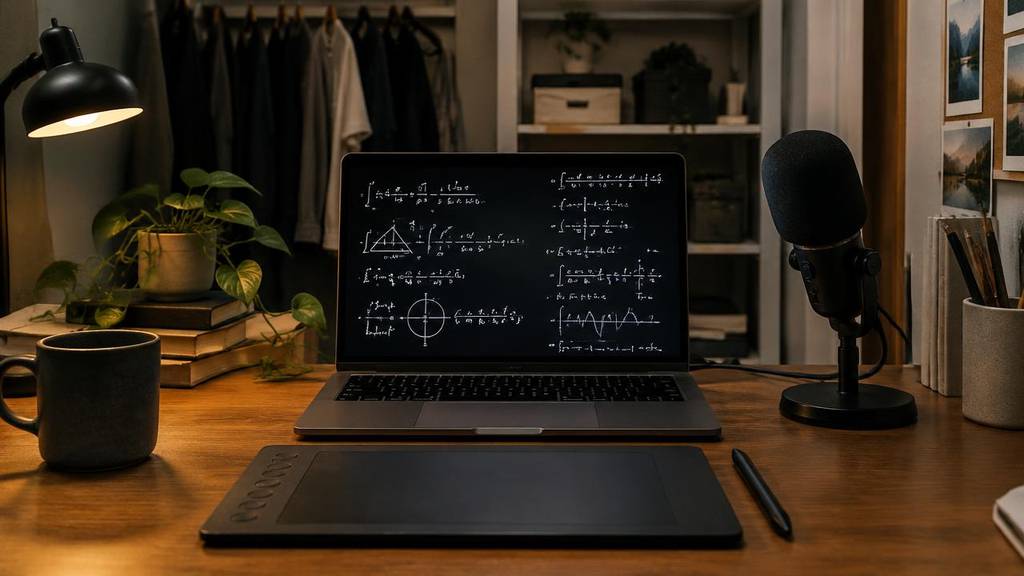
As more relatives wanted help, Khan started posting videos on YouTube in 2006. The format was visually simple: a dark digital canvas, handwritten marks, and his voice working through an explanation. The absence of a presenter on camera kept attention on the problem. More importantly, a recording could be paused or replayed without requiring a student to announce confusion to a roomful of peers. The technology was not elaborate, but it changed the social experience of getting stuck. A learner could revisit a step privately and continue when the reasoning became clear.
Khan Academy became a nonprofit in 2008, and Khan left his finance job in 2009 to work on it full time. That decision preceded financial security for the project. Support from donors, including Ann Doerr, helped sustain it, while major backing from Google and the Bill & Melinda Gates Foundation in 2010 accelerated its development. The sequence is important: useful explanations attracted attention, but broad access required an organization, funding, software, and collaborators. The familiar image of one person recording at home captures the beginning, not the full infrastructure of the educational platform that followed.
Videos were only part of the learning model. Practice exercises, feedback, and mastery-oriented progression addressed a limitation of watching: recognition is not the same as independent performance. A student might follow a solution and still be unable to produce one. Practice made that gap visible. The idea of mastery also challenged the habit of moving an entire group forward after a fixed interval, regardless of unfinished understanding. Khan explained these ideas in The One World Schoolhouse, published in 2012, connecting the online project to a broader argument about how learning could be organized.
Khan's experience does not prove that a clear video can replace every teacher, classroom, or form of guidance. It shows how a narrow teaching intervention can become powerful when it solves a recurring difficulty. Explain one concept, let the learner control the playback, and provide a way to test understanding afterward. Then improve the system using evidence of where people struggle. The most honest account of his success holds two facts together: he benefited from extensive formal subject education, and he built a new educational role through self-directed experimentation rather than waiting for a conventional teaching career to authorize it.
The Cheat Code: shortcuts that worked
1. Cheat Code: Remove the Face From the Frame
When teaching a symbolic process, let the working surface carry the explanation. Visible steps can matter more than elaborate production or a presenter on camera.
2. Cheat Code: Make Repetition Private
Use short recordings a learner can pause and replay without embarrassment. Control over pace is a practical feature, not merely a convenience.
3. Cheat Code: Test After Watching
Follow an explanation with a fresh problem completed without the example visible. The attempt reveals whether understanding transfers beyond recognition.
4. Cheat Code: Repair the Prerequisite
When a problem remains confusing, identify the earlier skill it depends on. Review that gap before increasing the difficulty or replaying the same advanced lesson.
Your plan to do the same
- Choose one precise concept rather than an entire course.
- Attempt a diagnostic problem to identify the missing prerequisite.
- Watch or create a short explanation showing each reasoning step.
- Pause and reproduce the method without copying the displayed solution.
- Complete several new problems and classify the errors.
- Revisit the prerequisite or explanation until independent performance is consistent.
Frequently asked questions
Is Sal Khan self-taught?
Not in mathematics and engineering: Khan earned relevant degrees at MIT and later an MBA at Harvard. His self-directed achievement was developing educational videos, a teaching approach, and a nonprofit platform outside a conventional teaching career. Calling him entirely self-taught would erase substantial formal subject training.
Why did Sal Khan start making YouTube videos?
Khan began tutoring his cousin Nadia in 2004, then helped other relatives. Posting videos in 2006 made explanations available without coordinating every lesson live. Students could pause, replay, and revisit material independently. That practical solution to family tutoring became the foundation for the much larger Khan Academy project.
Does Khan Academy rely only on videos?
No. Videos explain concepts, but practice exercises, feedback, and mastery-oriented progression are also central to the platform. Watching a solution can create familiarity without independent skill. Attempting new problems helps learners identify gaps and gives them a reason to review earlier material before moving to more demanding work.