
Filmmakers · Director, editor, and production experimenter
Steven Soderbergh Skipped College and Kept Testing the Medium
His alternative education was not a single breakthrough. It was an ongoing practice of shooting, cutting, changing scale, and questioning how a movie has to be made.
How did Steven Soderbergh succeed?
Steven Soderbergh succeeded by entering practical production work instead of college, developing his editing skills, and writing a distinctive independent feature. Sex, Lies, and Videotape broke through in 1989. He sustained his career by moving between commercial and experimental films while continually testing cameras, workflows, and storytelling methods.
The story
Steven Soderbergh was born in Atlanta in 1963 and grew up partly in Baton Rouge, Louisiana. As a teenager, he made films and gained access to equipment and a creative community rather than waiting for a university program to authorize his interest. After high school, he skipped college and pursued work in Los Angeles. The decision gave him proximity to production, not an instant directing career. Entry-level work exposed the distance between wanting to make movies and understanding how moving images are assembled under practical constraints. He eventually returned to Louisiana, carrying experience rather than a diploma or a guaranteed place in Hollywood.
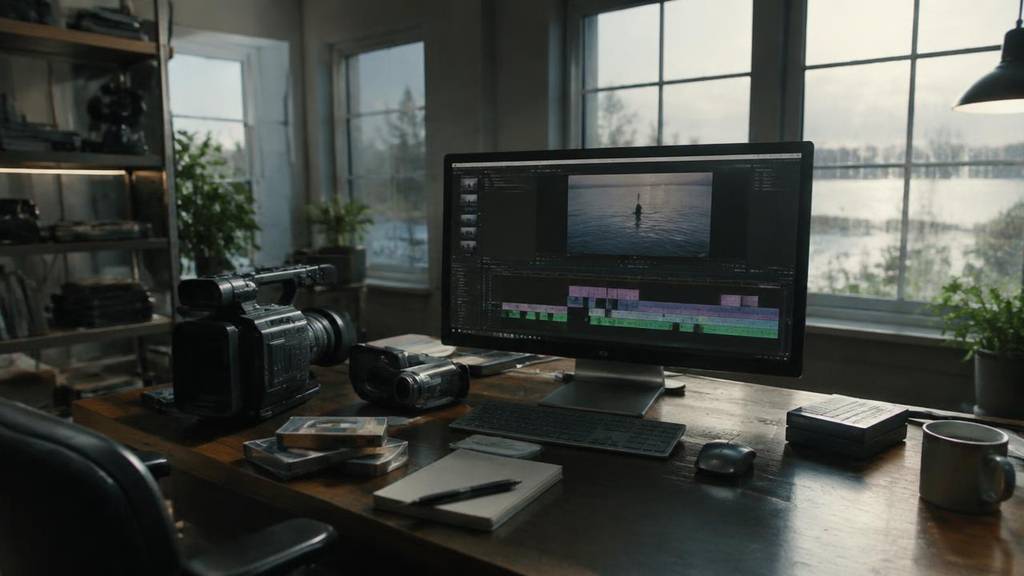
Editing and commissioned video work became important parts of his development. He directed the concert video 9012Live for Yes, released in 1985, an assignment that demanded attention to performance, coverage, and musical rhythm. Such work can look peripheral when a biography is organized around later feature films. In practice, it offers repeated opportunities to decide when to cut, what information a shot carries, and how recorded material differs from the experience of being there. Soderbergh's subsequent career would repeatedly cross the boundaries between directing, cinematography, and editing. Those were not merely credits collected for distinction; they were connected ways of investigating a film.
Sex, Lies, and Videotape arrived in 1989, written and directed by Soderbergh. Built around intimate conversations, relationships, and recorded confessions, it did not need a large physical world to create dramatic stakes. The film won the Palme d'Or at Cannes when he was 26 and became a defining success of American independent cinema. That reception was exceptional, not a predictable reward for bypassing college. What could be repeated was the alignment of means and material: a contained story, a strong conceptual hook, and scenes in which people revealing or withholding information became the action. The camera was implicated in the story itself.
The years afterward were not a straight ascent. Kafka in 1991, King of the Hill in 1993, and other projects received differing levels of commercial and critical response. Schizopolis in 1996 pushed into deliberately disruptive comedy and formal experimentation. Rather than treating the early breakthrough as a formula that must be repeated, Soderbergh kept changing the problem. Out of Sight in 1998 helped establish his command of a stylish studio crime film, with performance and editing central to its appeal. Reinvention carried risks, but it also prevented his professional identity from depending on one subject, one production scale, or one kind of audience.
In 2000, Erin Brockovich and Traffic demonstrated that range with unusual force. Soderbergh received directing Oscar nominations for both and won for Traffic. Ocean's Eleven followed in 2001, turning a star-filled ensemble and an intricate robbery into a major commercial success. Alongside directing, he frequently worked as his own cinematographer under the name Peter Andrews and as editor under Mary Ann Bernard. Those arrangements gave him direct contact with how production decisions would cut together. They did not eliminate collaboration; actors, designers, producers, sound teams, and other craftspeople remained essential. They changed the speed and intimacy of certain creative decisions.
His later experiments continued to challenge assumptions about tools and release models. Bubble in 2005 explored an unconventional distribution approach. Unsane in 2018 and High Flying Bird in 2019 were shot using iPhones, with professional planning and finishing around the small cameras. The lesson is not that a phone automatically produces a feature or that inexpensive equipment removes logistical difficulty. It is that a director can treat the apparatus as a variable rather than a permanent identity. Soderbergh's education has remained active across decades: make something, inspect the result, change the method. Skipping college was an early choice; continued experimentation became the lasting discipline.
The Cheat Code: shortcuts that worked
1. Cheat Code: Learn the Film Again in the Edit
Cut your own test scenes to discover which shots actually carry information and which production assumptions create problems later.
2. Cheat Code: Make Intimacy the Production Value
Sex, Lies, and Videotape demonstrates how disclosure, discomfort, and withheld knowledge can sustain a contained feature without spectacle.
3. Cheat Code: Change One Workflow Assumption
Test a smaller camera, a reduced lighting setup, or a different coverage plan while holding the dramatic objective constant.
4. Cheat Code: Alternate Scale to Protect Curiosity
Pair a conventional audience-facing project with a smaller formal experiment so your learning does not depend entirely on expensive opportunities.
Your plan to do the same
- Write a five-minute scene in which recording a confession changes a relationship.
- Shoot a simple version with a small camera and controlled sound.
- Edit it yourself and list every missing piece of information.
- Reshoot only the moments necessary to solve those gaps.
- Create a second version with a radically different shot strategy.
- Compare clarity, performance, time, and cost before choosing the workflow for a longer project.
Frequently asked questions
Did Steven Soderbergh go to college?
Soderbergh skipped college after high school and pursued practical film and video work. His development included early filmmaking, production experience, editing, and commissioned projects. His career is an example of an alternative to university training, not evidence that professional filmmaking can be mastered without sustained learning.
What was Steven Soderbergh's breakthrough film?
Sex, Lies, and Videotape was his breakthrough feature in 1989. Soderbergh wrote and directed the film, which won the Palme d'Or at Cannes when he was 26. Its contained production and intimate subject matter became closely associated with the rise of American independent cinema.
Which Steven Soderbergh films were shot on iPhones?
Unsane, released in 2018, and High Flying Bird, released in 2019, were shot using iPhones. Their small cameras were part of carefully planned professional productions. The films demonstrate alternative capture tools, but they still depended on performance, sound, lighting decisions, editing, and an experienced production team.