
Banking · Founder of Interactive Brokers
Thomas Peterffy: The Programmer Who Rebuilt the Trading Desk
Instead of trying to outshout the trading floor, he built machines that could calculate, quote, and process transactions faster.
How did Thomas Peterffy succeed?
Thomas Peterffy succeeded by combining self-taught programming with firsthand options-market experience. He used computers to calculate prices and progressively automate trading, then extended that infrastructure into brokerage. Without completing college, he built an advantage through engineering, repeated experimentation, and lower operating friction rather than relying on traditional Wall Street credentials.
The story
Thomas Peterffy arrived in the United States from Hungary in 1965, aged twenty-one, with little money and limited English. Born in Budapest in 1944, he had grown up under communist rule before deciding to build a life elsewhere. His early American employment included architectural drafting, work that rewarded precision but offered limited leverage for his ambitions. He briefly attended New York University without completing a degree. The decisive education came when he gained access to computing at work. Programming offered a different kind of tool: a carefully specified procedure could perform repetitive calculations far beyond a person's manual capacity.
Peterffy taught himself to program and eventually worked on systems connected to financial markets. That combination mattered more than either skill alone. A programmer unfamiliar with trading might automate the wrong task, while a trader unable to build software would remain dependent on the floor's existing workflow. Options supplied an especially promising problem because their values depend on multiple changing inputs. Calculations could help compare contracts consistently, but only if the resulting prices could be connected to actual transactions. Peterffy's emerging opportunity was to close the distance between mathematical evaluation and the messy human process of making a market.
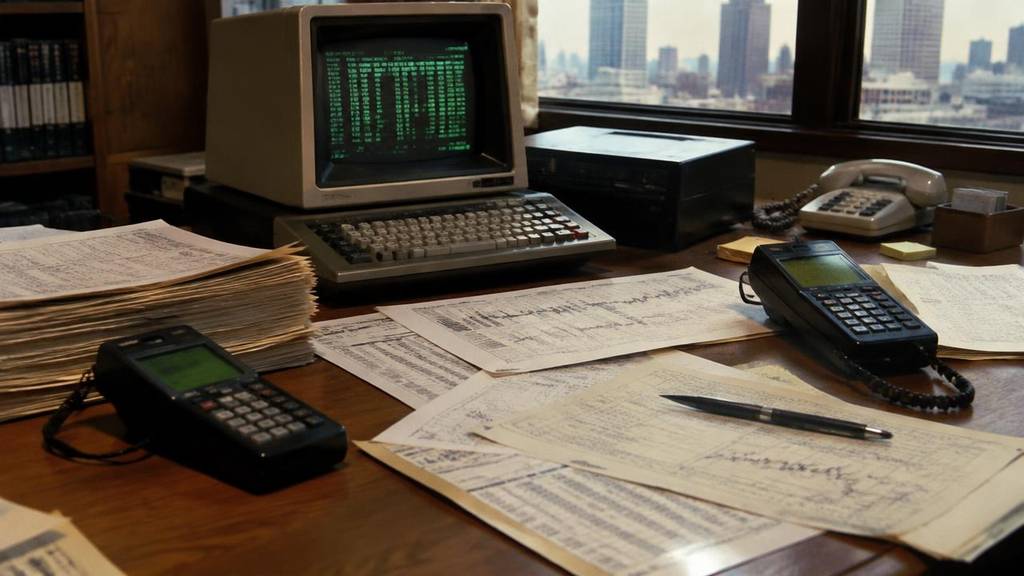
In 1977, he bought a seat on the American Stock Exchange and began trading equity options. Rather than abandoning computing for the traditions of the trading floor, he brought calculations into the business. Early versions involved computer-generated information used by people placing trades. Over time, he pushed toward portable devices and more direct electronic processes. The work was incremental: a calculation had to arrive in time, a trader had to interpret it correctly, and a completed transaction had to be recorded. Every handoff represented cost, delay, or a chance for error that engineering might reduce.
Timber Hill, established in 1982, became the organizational vehicle for expanding his market-making operation. Peterffy and his team developed technology that automated more of the quotation and trading process across markets. Exchange rules and technical limitations sometimes made direct computer connections difficult, forcing unusual workarounds. The larger point was not a particular gadget but a sustained design principle: if a repetitive action could be specified reliably, it might be transferred from a person to a system. That approach could increase scale without increasing staffing in the same proportion, provided the technology and financial controls worked as intended.
Interactive Brokers emerged as the brokerage extension of this infrastructure during the 1990s. The economics differed from simply taking proprietary market risk. Customers needed access, execution, account information, and tools for managing positions across products and countries. Automation could reduce the cost of delivering those services and make complicated transactions more accessible to experienced users. The company went public in 2007. Its development shows a powerful form of business evolution: machinery built to solve an internal problem can become the foundation of a service sold to outsiders, but only after reliability and customer requirements receive their own engineering attention.
Peterffy's story is sometimes presented as proof that one outsider can replace an industry with code. In reality, his advantage grew over decades through teams, infrastructure, exchange relationships, and continuous adaptation. Automated trading also creates risks that human intuition cannot repair quickly once an error propagates. Controls, testing, capital, and monitoring belong beside speed and low costs. His self-directed education did not reject technical rigor; it intensified it. The enduring method was to understand a financial process closely enough to describe it precisely, then build systems that performed its repeatable parts more consistently than the inherited workflow.
The Cheat Code: shortcuts that worked
1. Cheat Code: Code the Repeated Calculation
Peterffy targeted options calculations that humans had to repeat continuously. Identify a stable, measurable task before trying to automate an entire financial occupation.
2. Cheat Code: Sit Where the Software Must Work
His exchange membership exposed real execution constraints. Observe the operating environment directly so a technically elegant tool does not solve a problem users do not have.
3. Cheat Code: Remove One Handoff at a Time
From printed calculations to automated workflows, each transition reduced friction. Map where information is copied, delayed, or re-entered, then improve the highest-cost step.
4. Cheat Code: Sell the Internal Infrastructure
Brokerage extended capabilities developed for trading. Look for a dependable internal system that could serve customers, while recognizing that external service requires additional controls and support.
Your plan to do the same
- Learn enough programming to calculate and test a simple financial model on historical data.
- Observe a genuine trading or brokerage workflow and document every manual handoff.
- Build a non-trading prototype that automates one repetitive calculation or reconciliation task.
- Compare its speed, error rate, and total cost with the existing process.
- Add logging, exception handling, access controls, and a clear shutdown procedure before expanding.
- Evaluate whether the improved infrastructure solves an external customer's problem as well as your own.
Frequently asked questions
Did Thomas Peterffy graduate from college?
Peterffy did not complete a college degree. After emigrating from Hungary, he worked in drafting and taught himself programming, with a brief period of study at New York University. His financial expertise developed through software work and options trading, rather than through a completed finance or business degree program.
How did Thomas Peterffy start Interactive Brokers?
The brokerage grew from decades of work automating trading and market making. Peterffy began trading options in 1977 and established Timber Hill in 1982. During the 1990s, related infrastructure expanded into brokerage services, connecting customer access and execution to technology originally developed around the demands of professional trading.
Was Thomas Peterffy a programmer before becoming a trader?
Yes. Peterffy taught himself programming after arriving in the United States and worked with computing before purchasing an exchange seat. That sequence helped him approach markets as an engineering problem. His later success depended on combining software with direct trading experience, not on programming in isolation from financial operations.